LARCSet Kit ($39 USD, Group buy $150 for 5)
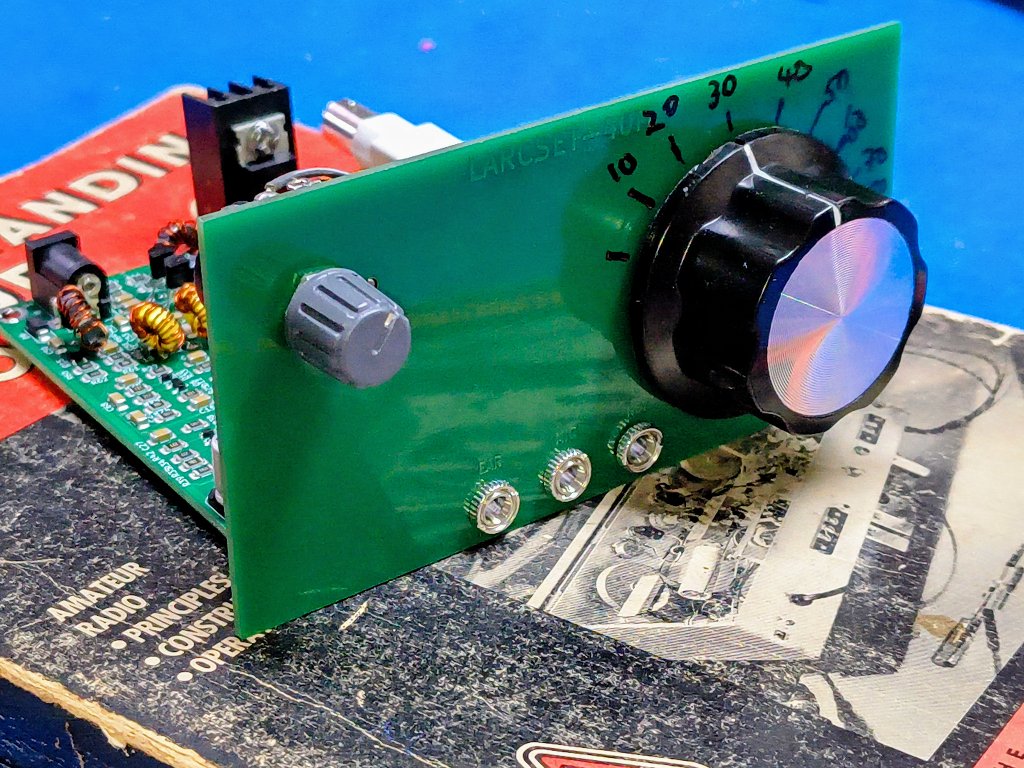
Full Manual | Git hub | Buy one for $39 | Buy 5 for $150
(Shipping starts on December 15th)
The LARCSet is an all analog SSB/CW transceiver kit that you can put together in a day. It is easy to build, easy to operate radio that brings back the fun of all analog, simple but functional radios back to the ham world.
The LARCSet was developed by Ashhar Farhan, VU2ESE and Sasi Bhushan, VU2XZ, of Lamakaan Amateur Radio Club as a need for getting more hams on air inexpensively with self-build radios that the builder can understand, fix and extend. The complete schematics and the PCB layout are released under GPL v3.0 on github. See here
The LARCSet is also the world’s most inexpensive SSB/CW radio. Build one this christmas! The shipping starts in second week of December 2025.
What does the kit contain?
This is a beginner’s kit. If you have some soldering experience you can build it
- It has an illustrated assembly manual with clear instructions
- The kit contains prewound trifilar transformers to make it easy for the first timers.
- You have to only supply a mic, morse key, earphone/speaker, antenna and a 12v DC power supply to get on air.
- It is supplied only as a board, the front-panel and bag of parts.
- The board uses large 1206 size SMD components that are presoldered
- A few through hole components like the ten inductors, a few connectors, etc., have to be soldered by the builder.
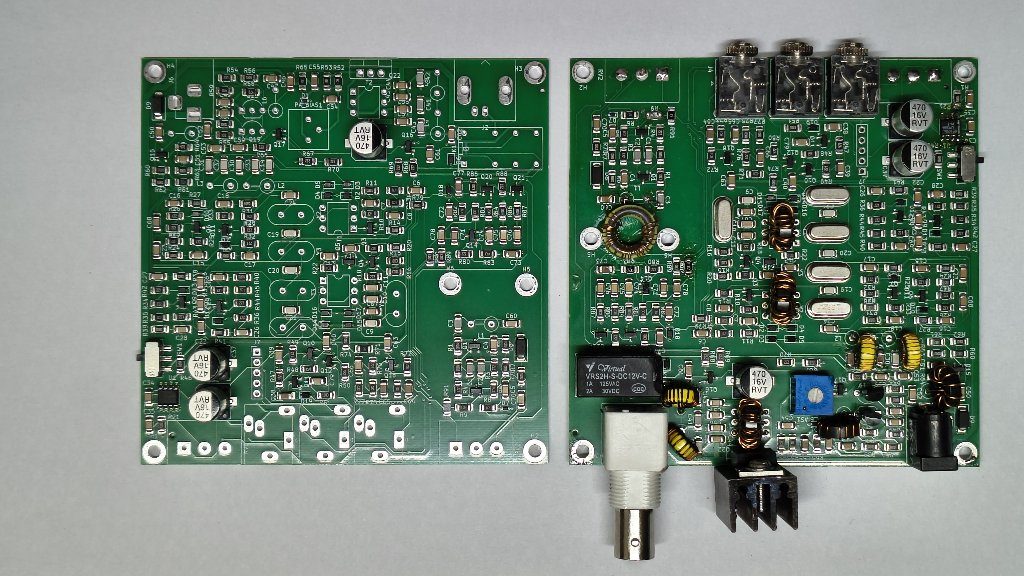
(The above images shows the kit supplied board next to the user assembled board)
Group Buys
The LARCSet is so inexpensive that packing, shipping and logistics are significant. HFSignals has introduced a group buy option where a number of local hams can buy five LARCSet kits for $150 (plus 25 dollars shipping).
Background to the Project
The Bitx radio developed in 2003 provided an easily built SSB radio that could be built from generic components for ten dollars. However, it needed to be scratch-built, a few test instruments were, though not necessary, very desirable to align it correctly. In retrospect, it was a reasonable success. Hundreds were built from scratch, many thousands were built from kits produced by a number of vendors. From Indonesia to Brazil, different versions of the BITX radios were developed, produced and sold under the permissive
For the last few years, we have been conducting classes for schools around Hyderabad to engage girls (specifically) towards science through ham radio. A workshop project of a direct conversion radio was developed that led the builder through building simple direct conversion receivers. This was a mixed success.
By far, the most successful effort were the direct conversion receivers that Dean Souleles, KK4DAS and Bill Meara, N2CQR designed and evangelized. Over 100 have been built, completely from scratch. Each radio is beautifully ugly in its own way, using parts that came handy to each builder.
Between 2003 and now (2025), the challenges and advantages of building radios have changed. A few relevant changes are:
- Surface mounted components are far cheaper than the through hole components ever were.
- Prototyping services like OshoPark and JLCPCB make even low volume productions cheaper than etching your own PCB and hand soldering radios.
- People have more modest labs and far less time on their hands than to solder a whole Heathkit HW-101 by themselves.
With that perspective, at Lamakaan Amateur Radio Club, we put the question to ourselves of how inexpensively can an HF radio be built and distributed. The LARCSet is the end result of that
When tasked with this, we are reminded of a few international projects. In 1976, at the ARRL, Jay Rusgrove W1VD, developed a transceiver kit called the “IARU Goodwill Project transceiver kit”. This was covered in the April 1978 and December 1978 issues of the QST. One laptop per child (OLPC) was another such initiative. The Raspberry Pi and Arduino are more successful and recent examples of similar efforts.The question before us was, can we produce a transceiver that can be distributed for less than 30 dollars? If so, what capabilities can we build into such a set?
We considered if we could at all produce a very low cost radio transceiver, that is inexpensive enough to be gifted for free. Something that is easily understood, extended and played around with. With the Lamakaan Amateur Radio Convention (LARC) coming up, we set ourselves to be able to gift these surface mounted PCBs to all the delegates:
- Transmit at least 5 watts of power on CW and SSB and operate on one band
- It should cost less than 30 dollars (when the kit is produced in quantity)
- A judicious mix of surface mounted components and user assembly can lower the cost
- The radio should be buildable over a single weekend in a few hours
- Fully open sourced with all the circuitry in public domain
- Fully analog design with a very clean transmitter and crisp receiver
- Circuit is laid out on a relatively large PCB
- Allows extensions, experimentation and understanding
- Very few components to be installed by the user
- User must provide the power supply, speaker/earphone, mic and/or cw key
Circuit Description
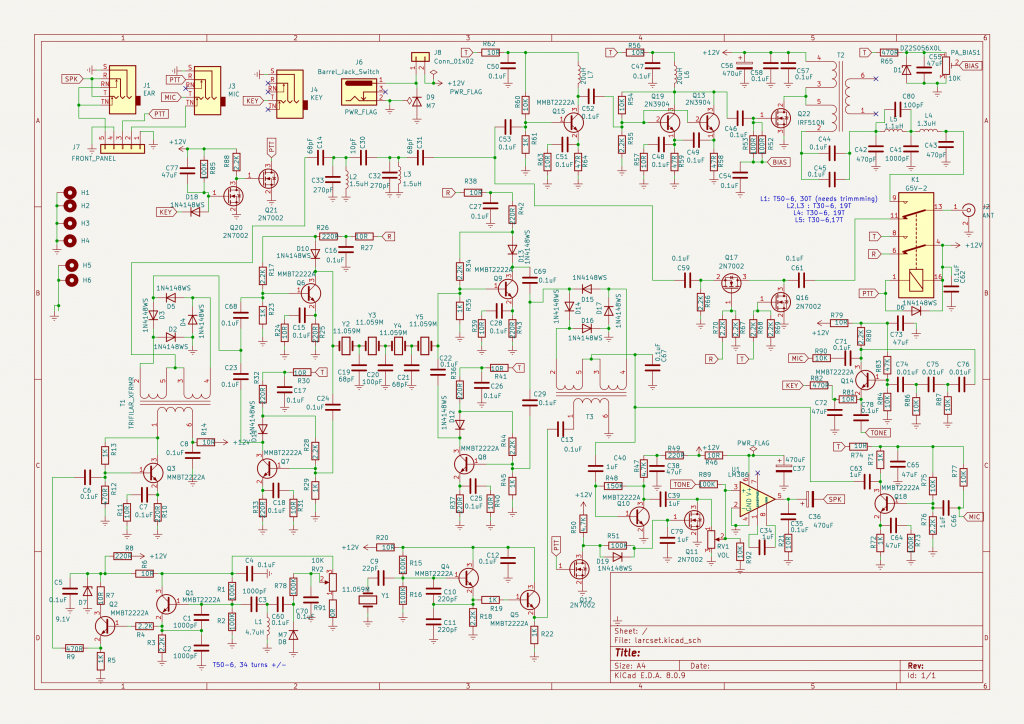
The BITX is a family of radios that use bidirectional circuitry. The signal travels through the same stages, reversing the direction signal flow when receiving or transmitting.
The radio is an updated and optimized version of the original BITX40 radio. In the interest of keeping the cost down as well as keeping the assembly simple. The current circuit maximizes on low cost SMD components while keeping the through hole assembly to just some large components.
Although simple, every effort was made to coax as much performance as was possible given the limitations of keeping the circuit simple and affordable.
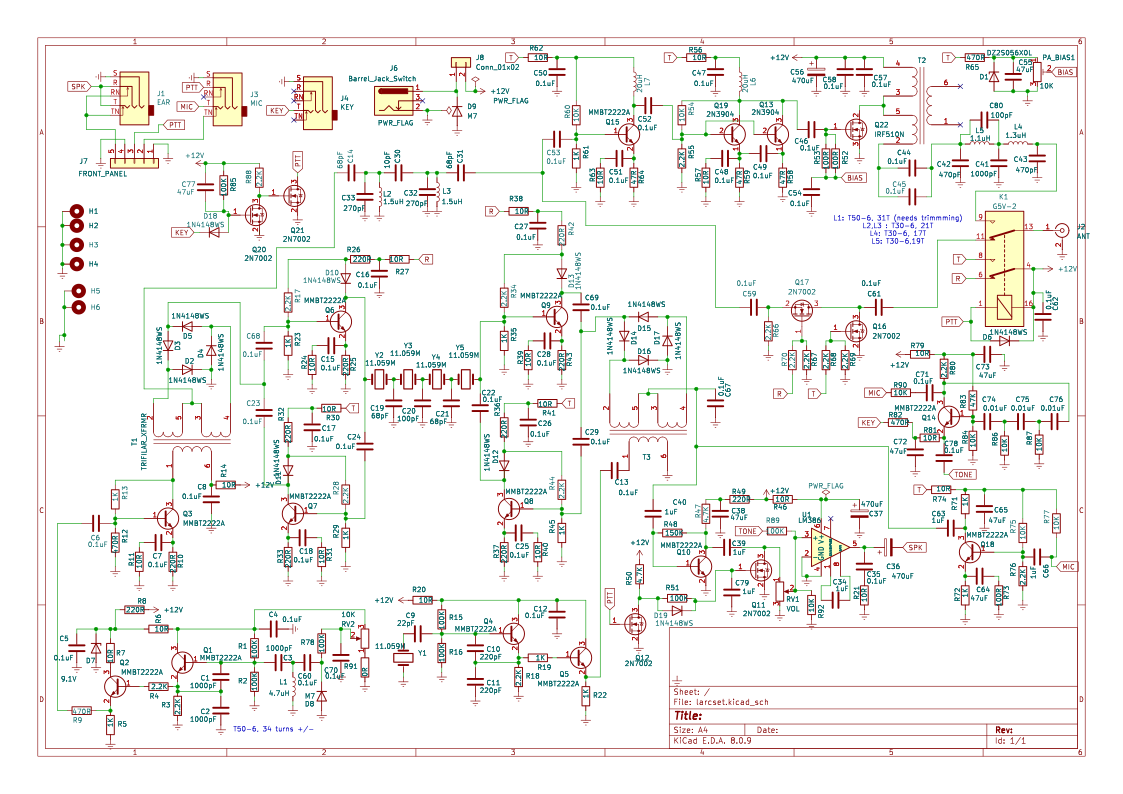
It has a clean spectrum. See the spectrum plot below :
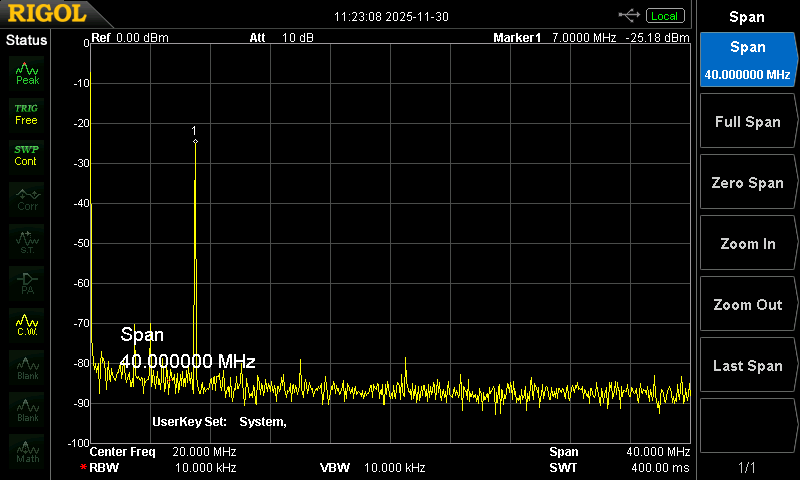
Technical Specifications:
Frequency Coverage: Any 150 KHz of 7 MHz band
Tuning mechanism : Varactor tuning
Modes: LSB/CW
Power output: 5 Watts
Architecture: Bidirectional superhet transceiver with 11.0529 MHz Intermediate Frequency
Power Supply : 12V, 1.5A
Kit Contents:

1. 100mm x 100mm main circuit board with presoldered SMD components
2. Front Panel
3. Tuning potentiometer with a large knob
4. Volume potentiometer with on/off switch and a smaller knob
5. Audio phono connectors for the earphones, mic and the key
6. DC power connector with a spare DC plug
7. IRF510 and heatsink, mounting screw
8. 11.0592 MHz matched crystals for the filter and the BFO
9. T/R relay
10. 8 pin connector for external speaker/mic, etc.
11. BNC Antenna connector
12. Enamel coated winding wire
13. Three trifilar wound RF transformers on FT37-43
14. Four T30-6 toroids
15. One T50-6 toroid for the VFO
16. Two FT37-43 for RF chokes
17. An elecret microphone element and a push button (to make your own mic with PTT)
18. A spare 3.5 mm audio stereo jack
19. Brass stand-offs to mount the radio in your enclosure
20. 10K trimpot to set the PA Bias
21. 2N3904s x 2
- Buy LARCSet Kit (59 USD inclusive of 7 day DHL International shipping with tracking & Paypal charges)
- LARCSet Kit Group Buy (175 USD inclusive of 7 day DHL International shipping with tracking & Paypal charges)